
Revisiting Volatility

Volatility has increased recently, and it’s one of those things that never really gets easier, even though we’ve all been through it before. Every time the market drops, it feels different. The reasons and headlines are different each time, and some feel more significant than others. And it’s true that each time is unique, and a lot of these events carry real consequences far beyond markets. I don’t want to brush off the significance of events that often cause volatility, but rather step back for a minute.
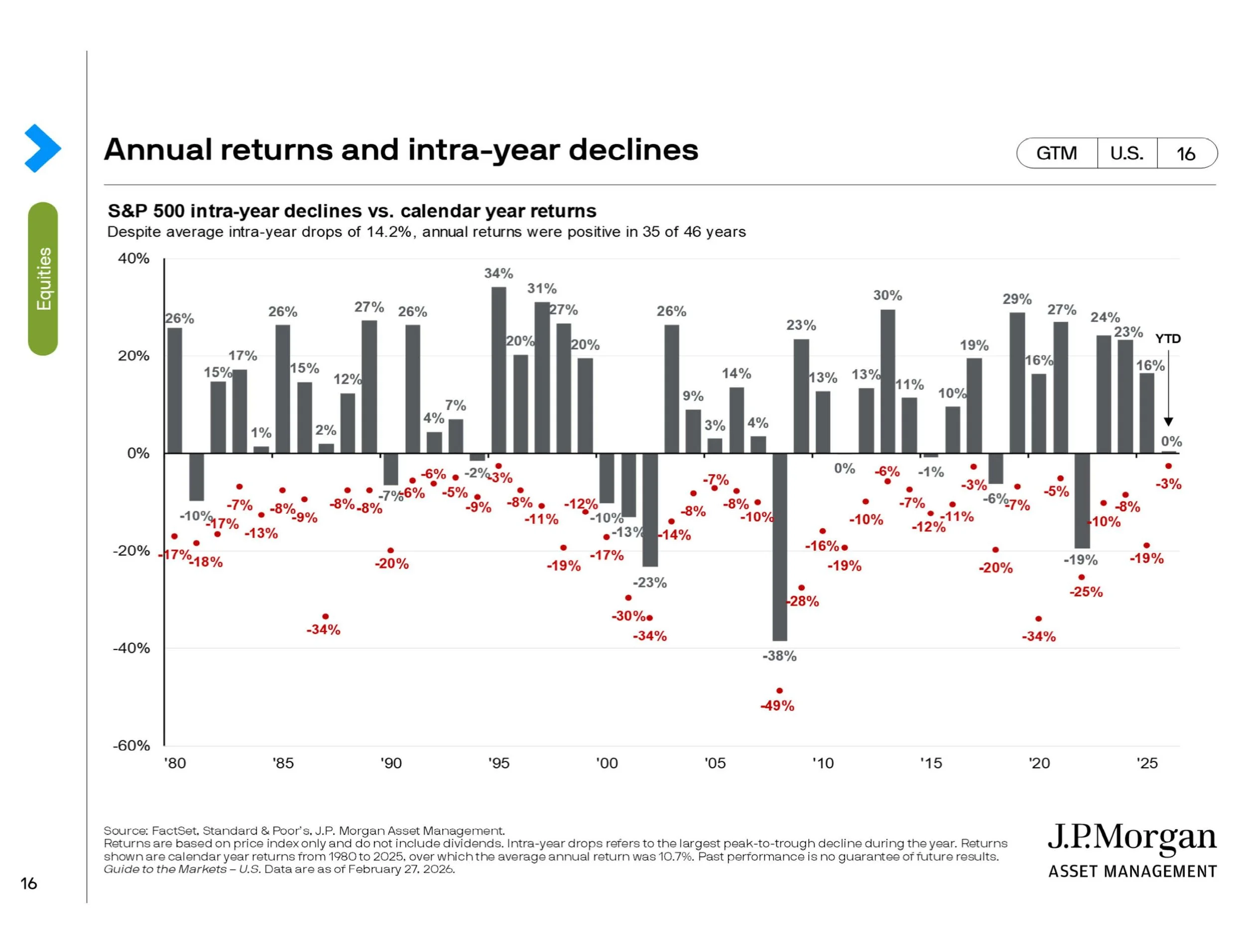
One thing that is often overlooked, even in good years, is that the market doesn’t move in a straight line. It’s pretty normal to see meaningful pullbacks during the year of 10%, 15%, or more, and still end up finishing positive; we just don’t remember those parts as much. We remember the end result, not the path it took to get there. But that path matters, because it’s where most of the discomfort comes from.
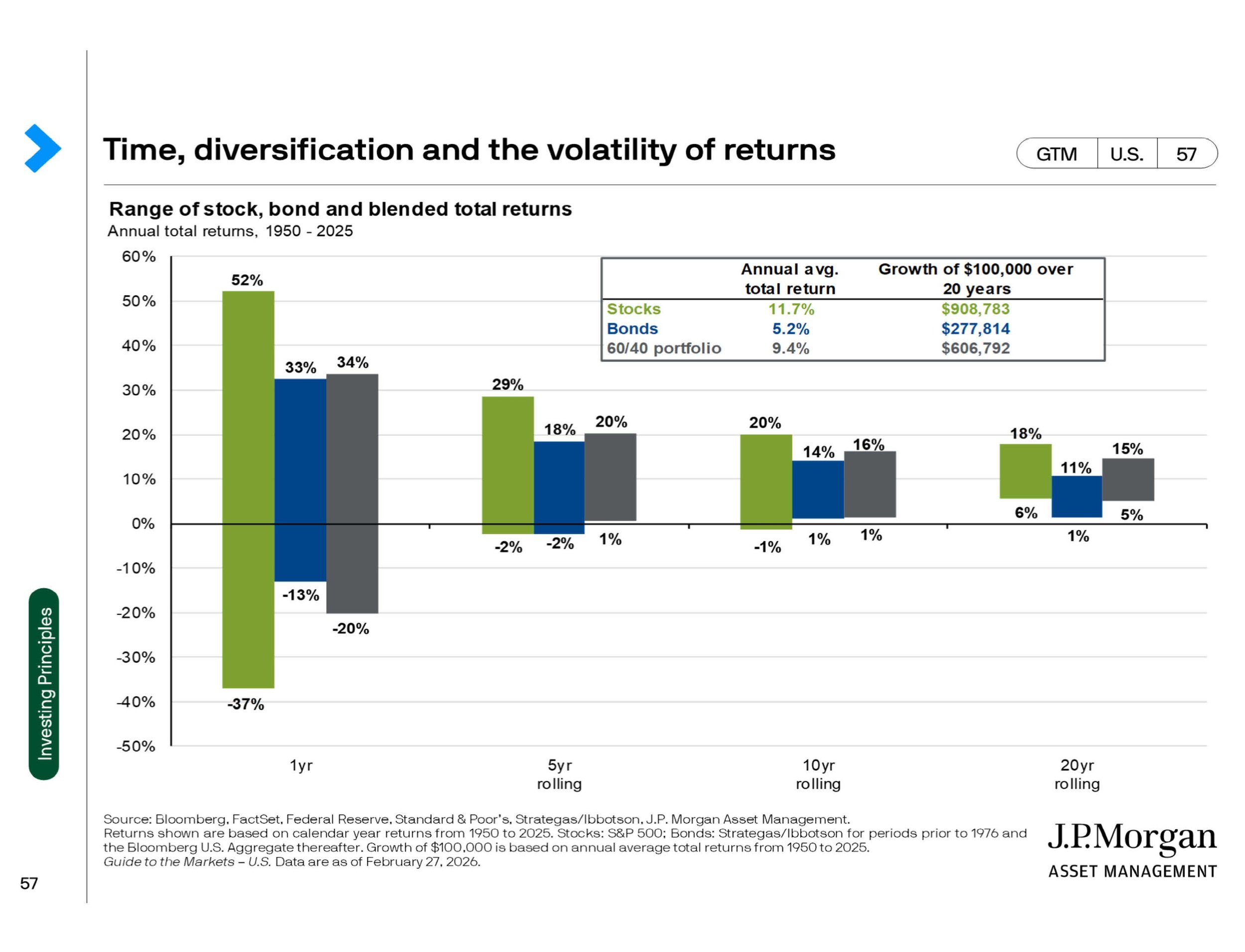
Things start to feel a little more grounded when you zoom out. Short-term, markets can feel unpredictable. There’s a wide range of outcomes, and a lot of noise. But as you stretch the timeline, the range of outcomes tightens up quite a bit, and the odds start to tilt more in your favor. Time doesn’t eliminate volatility, but it has historically made it easier to live with.
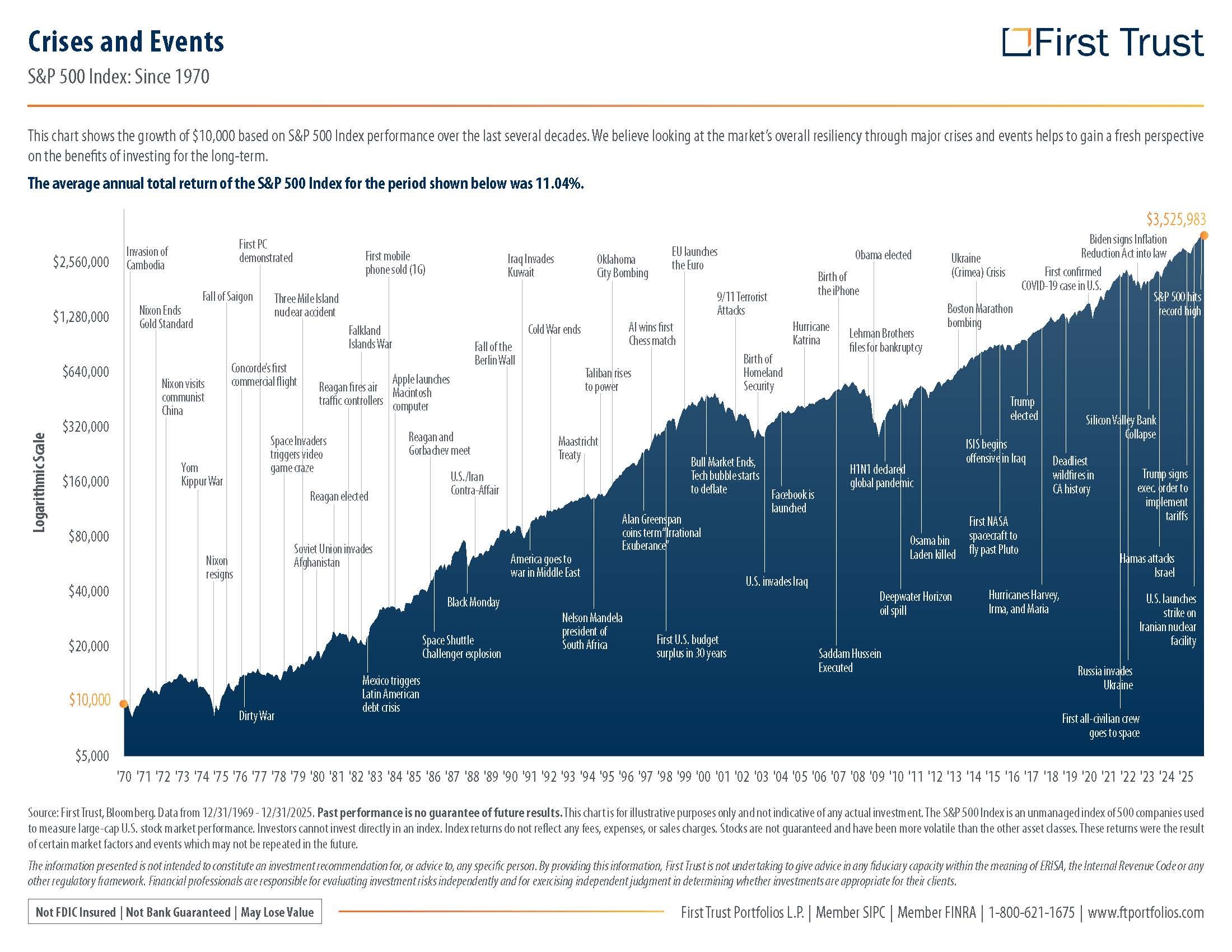
It’s also worth remembering just how much the market has already endured. Wars, recessions, pandemics, terrorist attacks, and financial crises—none of these are small things. And again, the point here isn’t to minimize any of them. They’re serious, and they impact people in very real ways. But from an investing standpoint, markets have had a way of working through them. Sometimes the reaction is sharp, and it takes time. But broadly speaking, markets have been resilient.
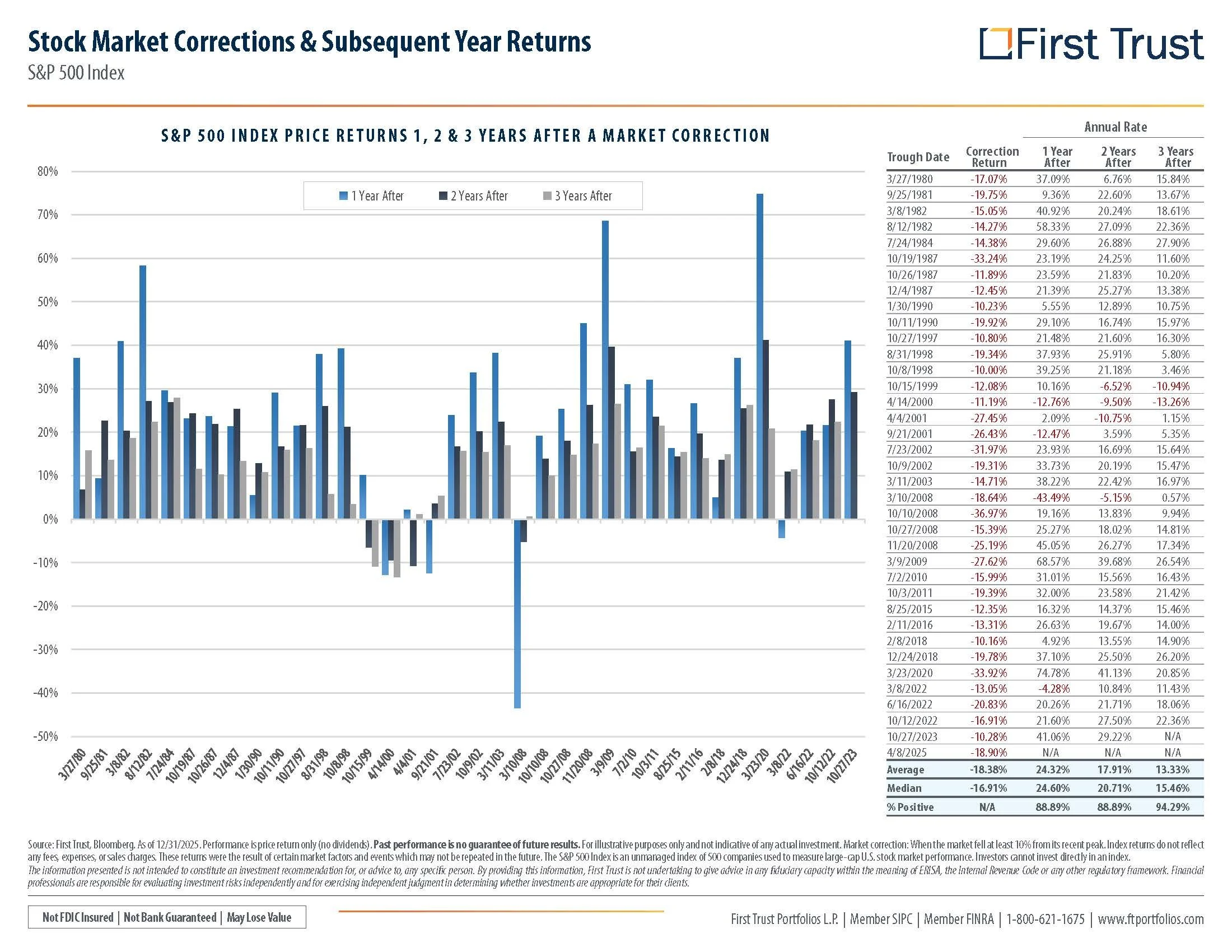
It’s also interesting to note that historically, when the market has gone through a correction (10% or more), the periods that follow have often been pretty solid. On average, returns in the next year have been strong, and more often than not, they’ve been positive. That doesn’t mean you should want volatility, but it does mean that volatility hasn’t been the end of the story.
As a takeaway, volatility isn’t a signal that something is broken; it’s simply part of how markets work, and it increases with uncertainty. Markets shift as people try to make sense of what’s happening in real time. And while every period feels different (because it is), the broader pattern hasn’t changed all that much. Markets get tested, they adjust, and they move forward. Not in a straight line, but onwards and upwards over time.